From schist and quartz hills to the sands of L’Estagnol.
01
Domaine de Brégançon stands out not only for its exceptional geographical setting, but also for the richness and diversity of its terroir.
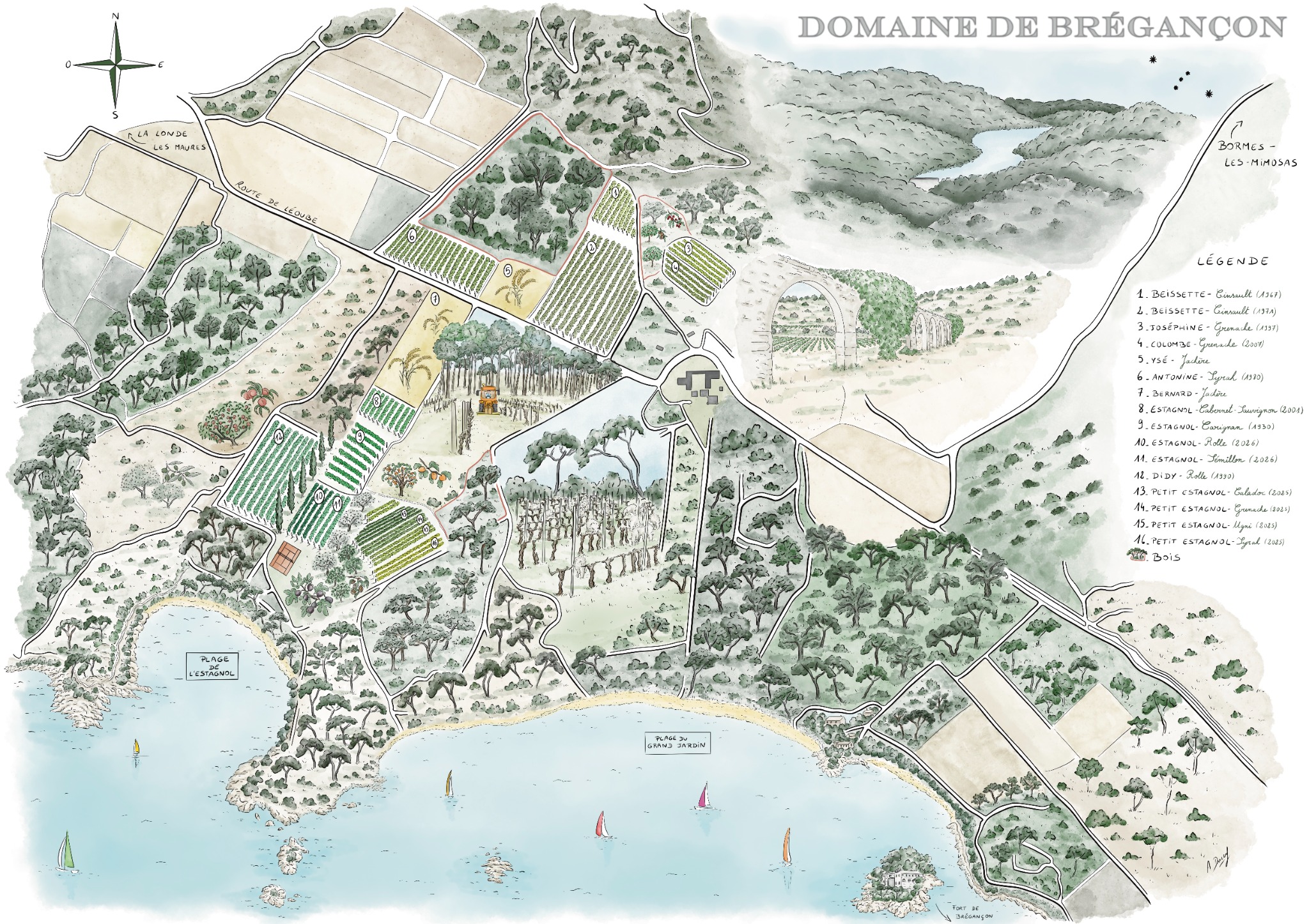
35 hectares at the heart of the protected Brégançon site, 15 of them under vine.
An unspoilt landscape
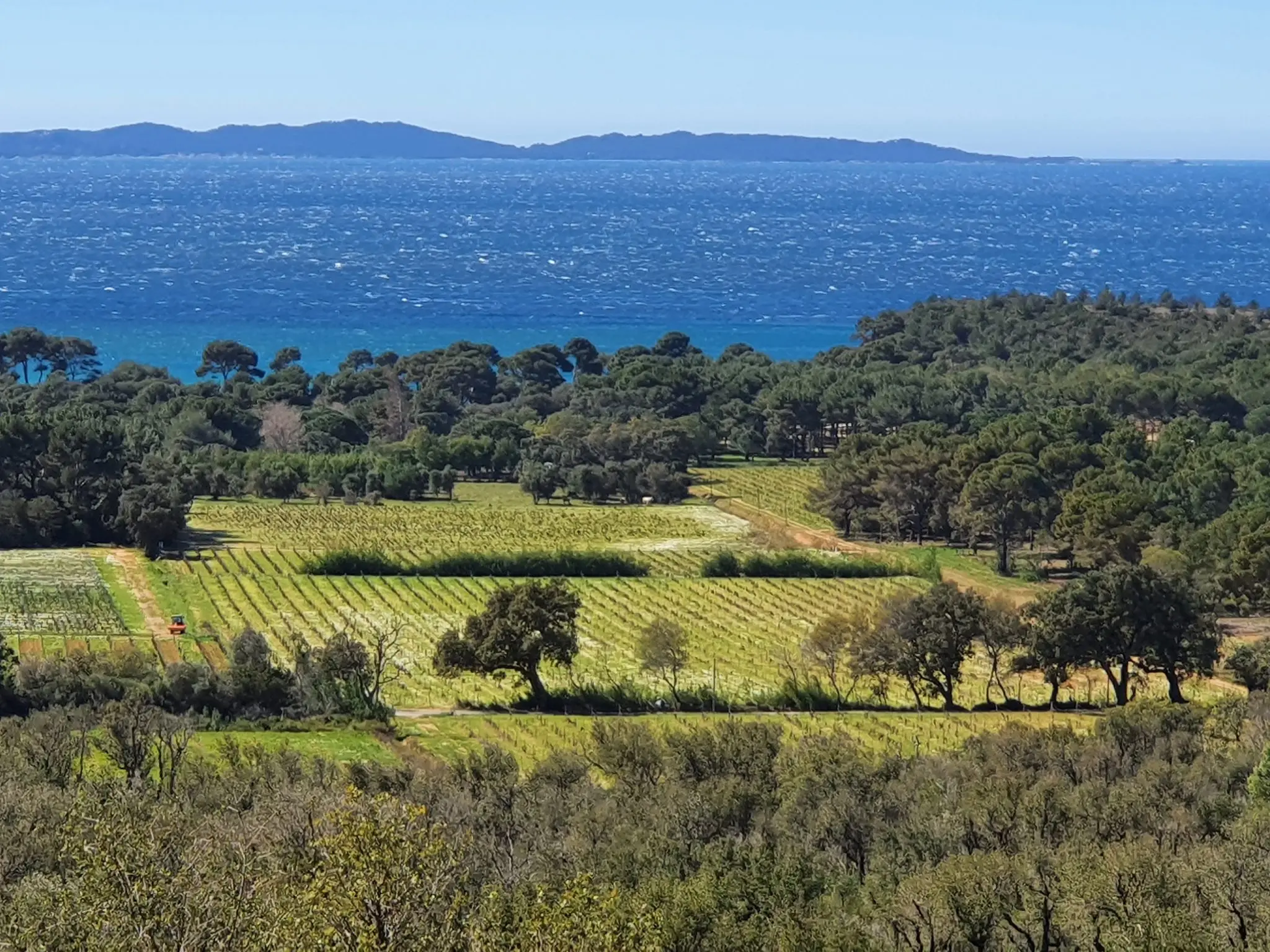
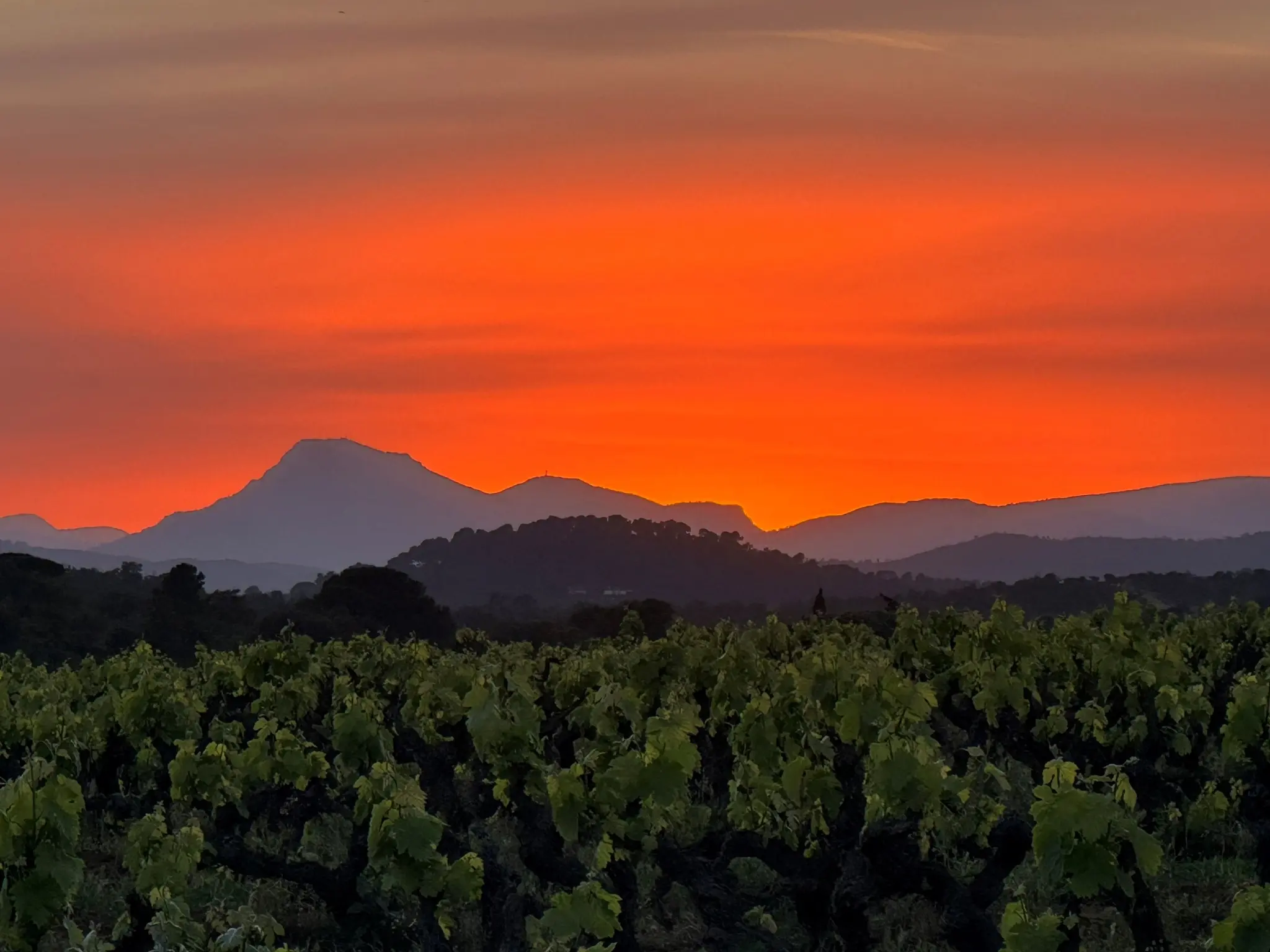
An integral part of the prestigious, officially protected Brégançon site, the 35-hectare estate—with its hills, plain and coastal strip—offers a landscape of striking beauty, where the vines blend harmoniously into an unspoilt natural setting.
To the north of the estate, the rolling Roches Blanches hills offer exceptional panoramic views over the terroirs, shoreline and Îles d’Or. Seen from the sea, they form a distinctive green backdrop.
The terroirs in the central part of the estate, between Château de Léoube to the west and Château de Brégançon to the east, form a mosaic of vines and Mediterranean maquis.
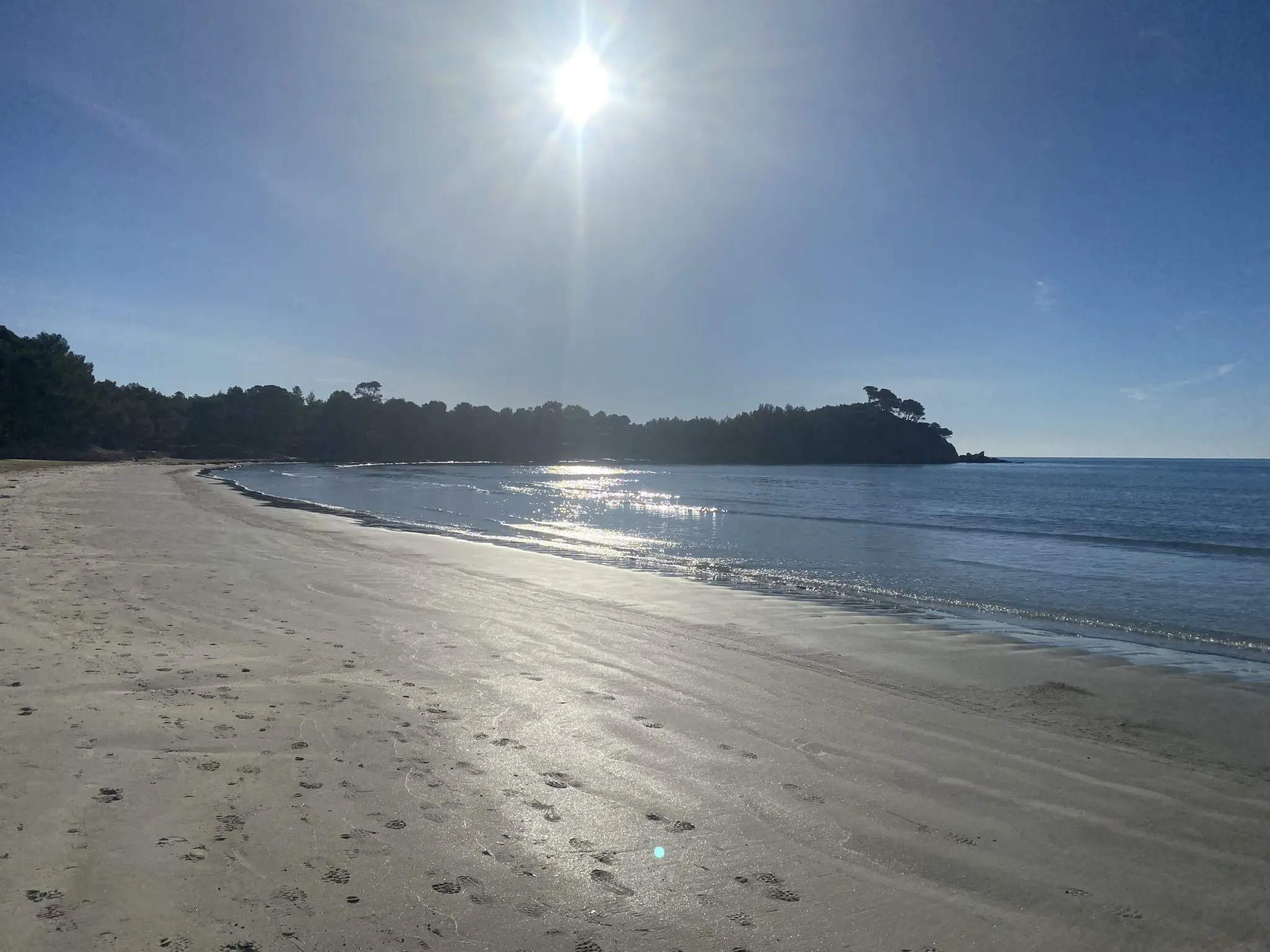
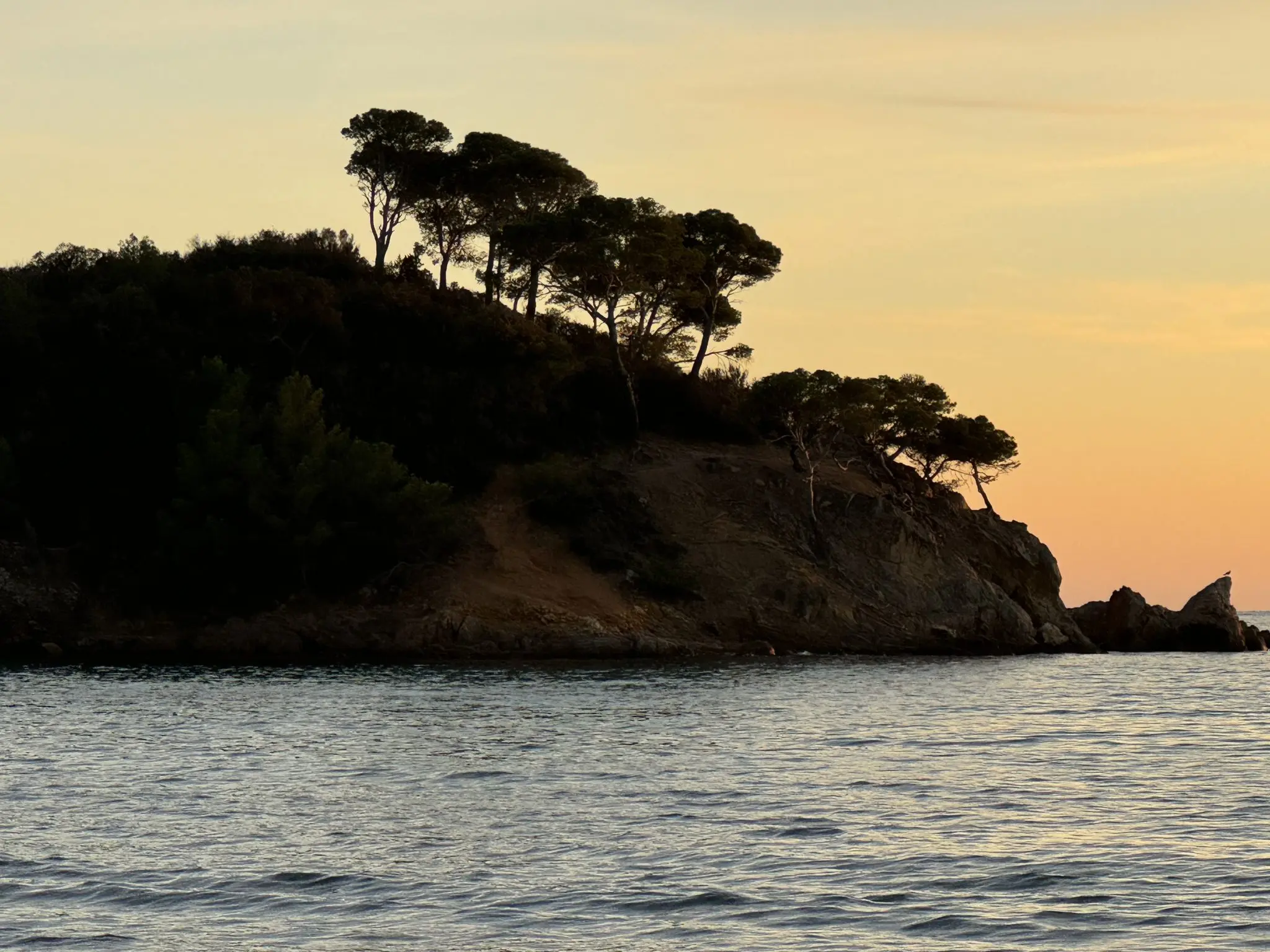
To the south, the proximity of L’Estagnol beach, where the estate’s vineyards come to an end, enriches the panorama and creates a striking contrast between the verdant hillsides and the crystal-clear waters of this exceptional beach.
Coastal forests and maquis
The estate’s vegetation comprises coastal forests and maquis.
Aleppo pine and cork oak predominate, but stone pine and maritime pine are also present. These dominant tree species are accompanied by a shrub layer of varying density, made up of strawberry trees, pistachio trees, cypresses, rockroses, mock privets (Phillyrea), wild olive trees and downy oaks, as well as more recently introduced invasive species such as mimosa and eucalyptus.
The estate’s geography
From Roches Blanches to L’Estagnol beach
Schist and quartz
The soils in the north of the estate developed over the bedrock of “crystalline Provence”, composed mainly of phyllites from the Massif des Maures and traversed by quartz veins.
Beneficial to viticulture, the layered structure of these phyllites allows water to infiltrate deeply, preventing shallow waterlogging that could impair the development of the vines’ root systems.
Furthermore, erosion of these metamorphic rocks at the top of the estate has produced relatively soft bedrock that is easy to work for new plantings.
Down to the coastal sands
In the southern part of the estate, the soil gradually gives way to a profile of weathered sandy material, or grus.
Coarse fragments produced by the erosion of phyllite and quartz become scarcer, while the proportions of sand and clay increase. This transition culminates in a coastal dune system at the water’s edge, where pines predominate.
The estate’s 15 hectares of vines benefit from this diversity of soils and a Mediterranean climate strongly influenced by the sea. Rolle, Ugni blanc, Sémillon blanc, Syrah, Grenache noir, Cinsault, Carignan, Cabernet Sauvignon and Caladoc are grown here.
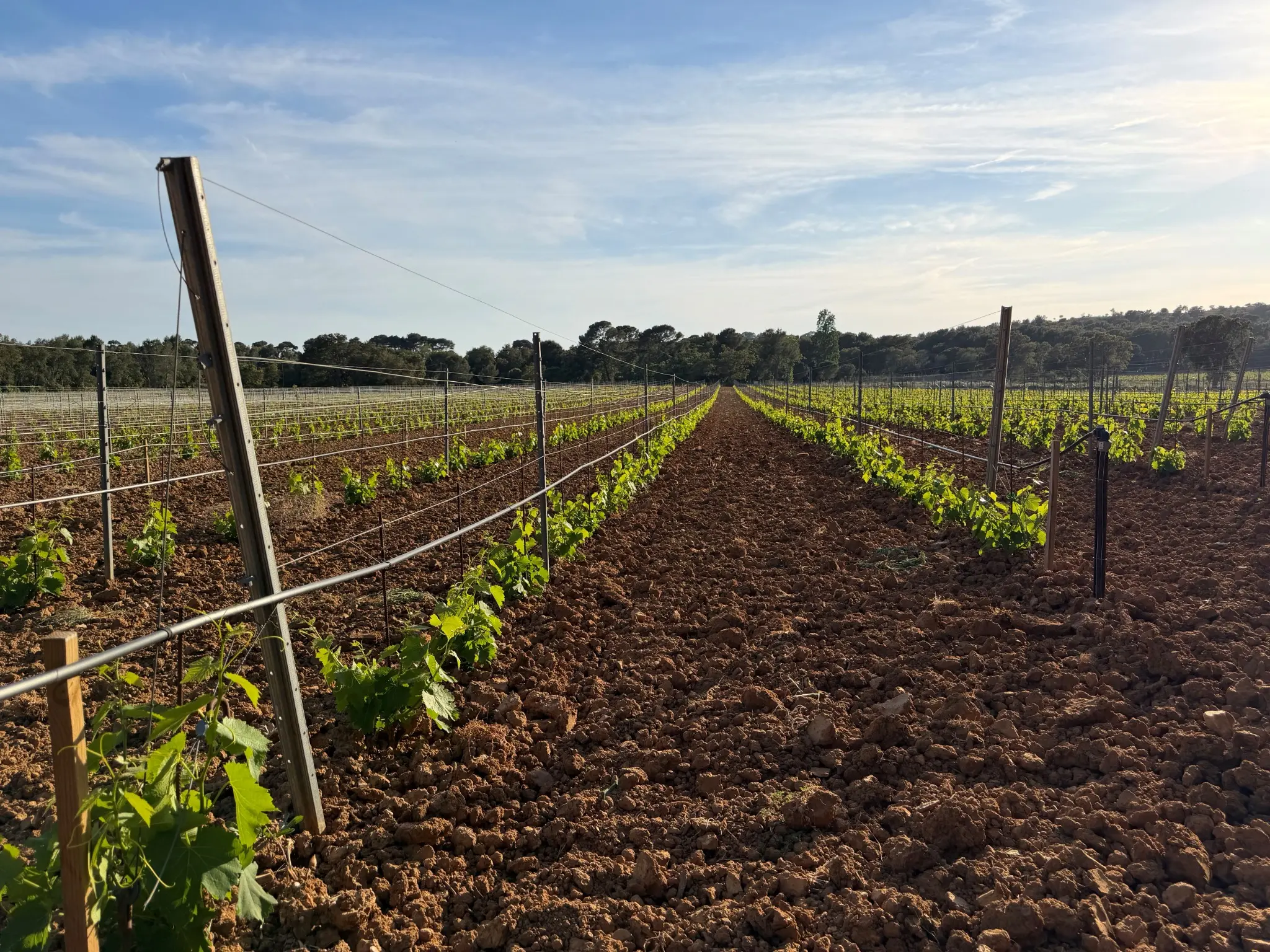
Plantier du Petit Estagnol, the estate’s southern terroirL’Estagnol beachThe vineyard ends at the edge of the MediterraneanLa Beissette, the estate’s northern terroir