
Since 1816

Our history

A family estate since 1816. Today, a new expression of Brégançon.

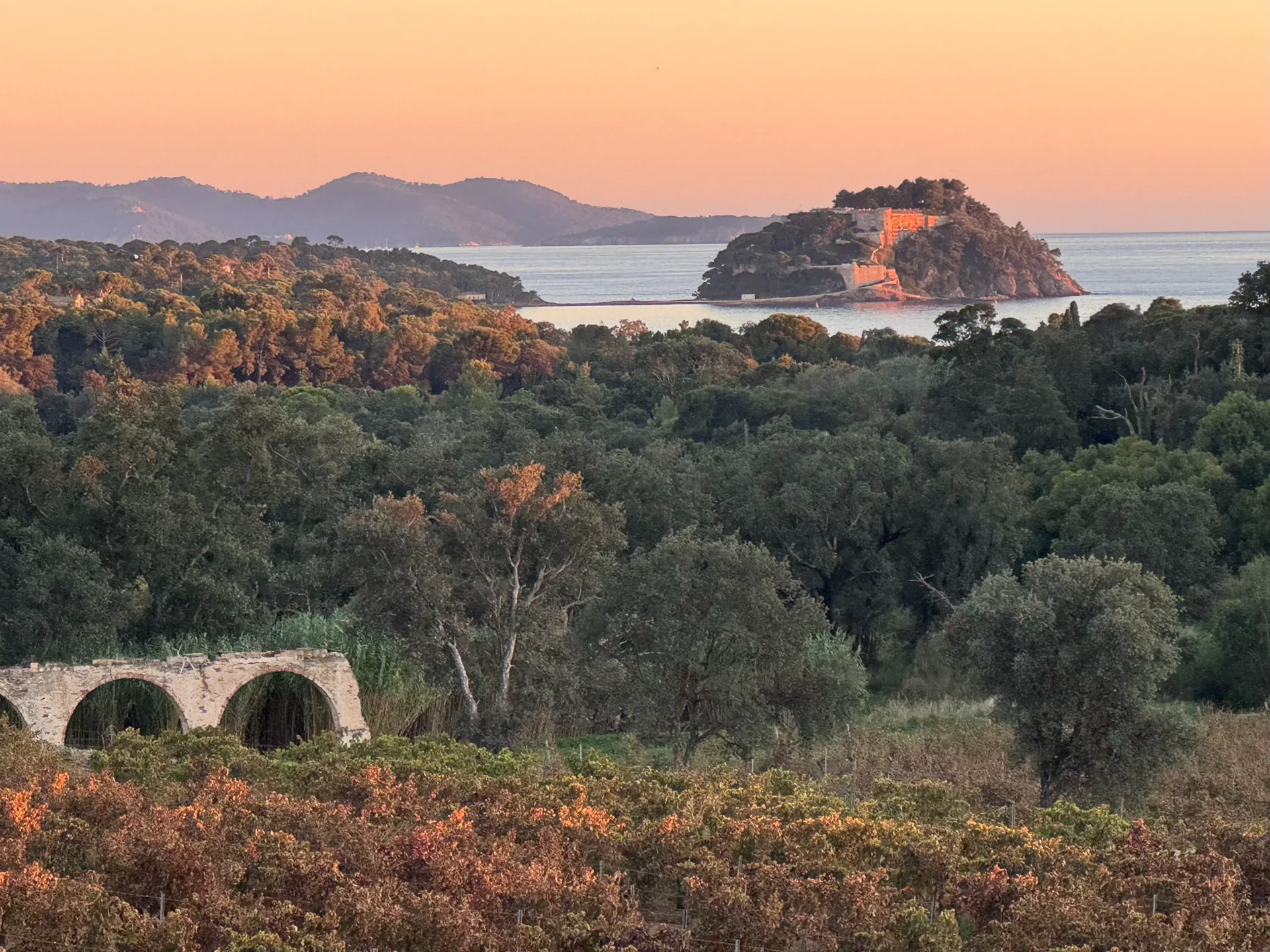
Domaine de Brégançon and the Fort de Brégançon at sunset

A Mediterranean
terroir

Brégançon is more than a name. It is a terroir.

It is shaped where the Massif des Maures meets the Mediterranean, as maquis-covered hills slope down to an agricultural plain before reaching the coastal sands.

At the heart of this protected landscape, between Château de Léoube to the west and Château de Brégançon to the east, the lands of Domaine de Brégançon form a 35-hectare estate, 15 hectares of which are planted with vines.

The Domaine is an integral part of Brégançon—its geography, its history and its identity.

A family history dating back to 1816

The family’s history began in 1816, when Simon Sabran acquired a vast agricultural estate overlooking the Îles d’Or. This Provençal property then passed through generations, marriages and changing times.
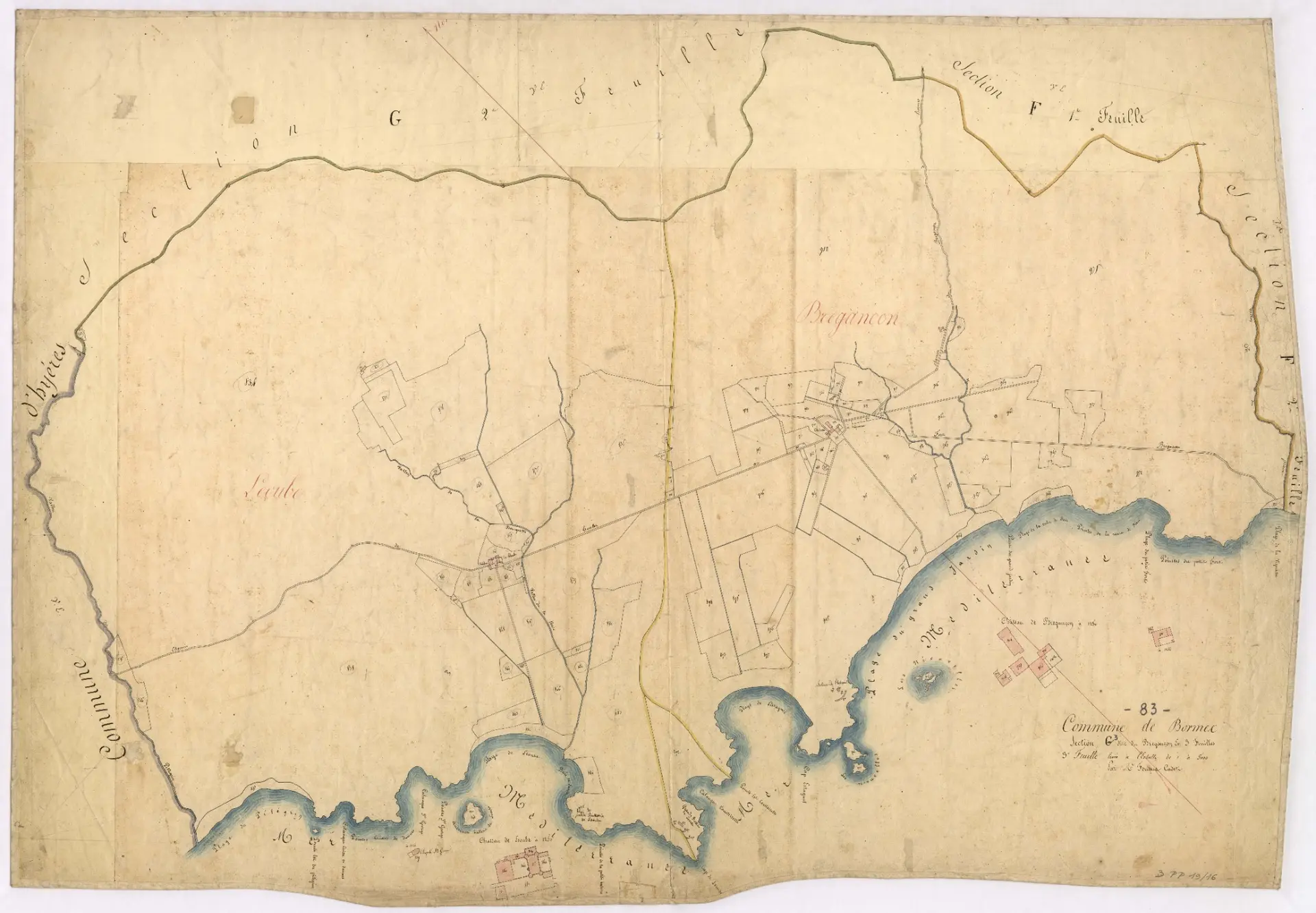
Napoleonic cadastral map of Brégançon, drawn in 1825 by Esprit Fouque, known as Cadet

After passing for a time into the hands of the Chappon family, the estate returned to Simon Sabran’s descendants through the marriage of Hélène Chappon and Hermann Sabran. In the early 20th century, Marguerite Sabran married Georges Tézenas, and the destiny of the Tézenas family became enduringly entwined with that of Brégançon.

For more than two centuries, this land has been cultivated, handed down and transformed. For many years, mixed farming coexisted with the vines, which retained an essential place amid the forests and Mediterranean maquis.
An estate handed down and divided

Over the generations, the estate acquired in 1816 was handed down within the family before being gradually divided among the descendants of Georges and Marguerite.

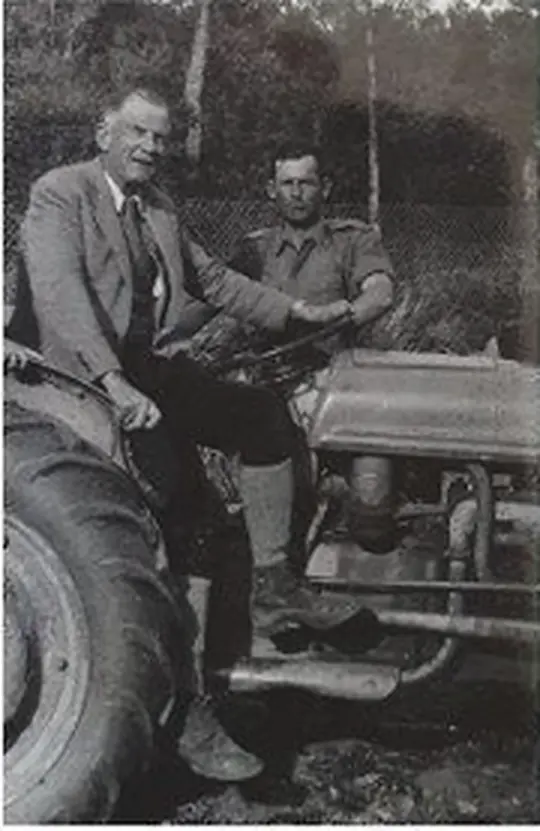
Two men beside a vintage tractor
Georges and his son Bernard Tézenas du Montcel

Domaine de Brégançon grew out of this history. Today, the Domaine, together with the land it farms, belongs to Antoine Tézenas du Montcel. Antoine is the grandson of Bernard, the eldest of Georges and Marguerite’s children, who developed the family estate from the 1940s to the mid-1970s.

The Domaine is developing its own winegrowing and winemaking venture across a patchwork of land with a distinctive geography, stretching from parcels encircled by maquis on the higher ground to coastal vineyards that run down to the shores of the Mediterranean, opposite L’Estagnol beach.

From the schist and quartz of the higher ground to the sands along the shore, this diversity shapes a remarkable winegrowing landscape and today marks the beginning of a new adventure.

Writing a new chapter

Antoine Tézenas du Montcel and Hugo Vuoso, the Domaine’s estate manager, are leading a project rooted in the essential identity of these lands: their diversity, their maritime character and their ability to produce single-vineyard wines that precisely express their place of origin.

Their conviction is simple: Brégançon is not a uniform terroir. From the schist and quartz of the hills to the coastal sands, every parcel has its own exposure, texture, energy and voice.

Rather than seeking a single style, the Domaine aims to reveal these differences through limited-production cuvées conceived as individual expressions of a multifaceted terroir.

To support this ambition, the Domaine has formed a partnership with Alexandre and Frédéric Chaudière, owners and winegrowers at Château Pesquié, a leading estate in the Ventoux AOC committed to organic and biodynamic farming. Their experience of working parcel by parcel, their close attention to the soils and their pursuit of freshness and balance complement the intimate knowledge of Brégançon brought by Antoine Tézenas du Montcel and Hugo Vuoso.

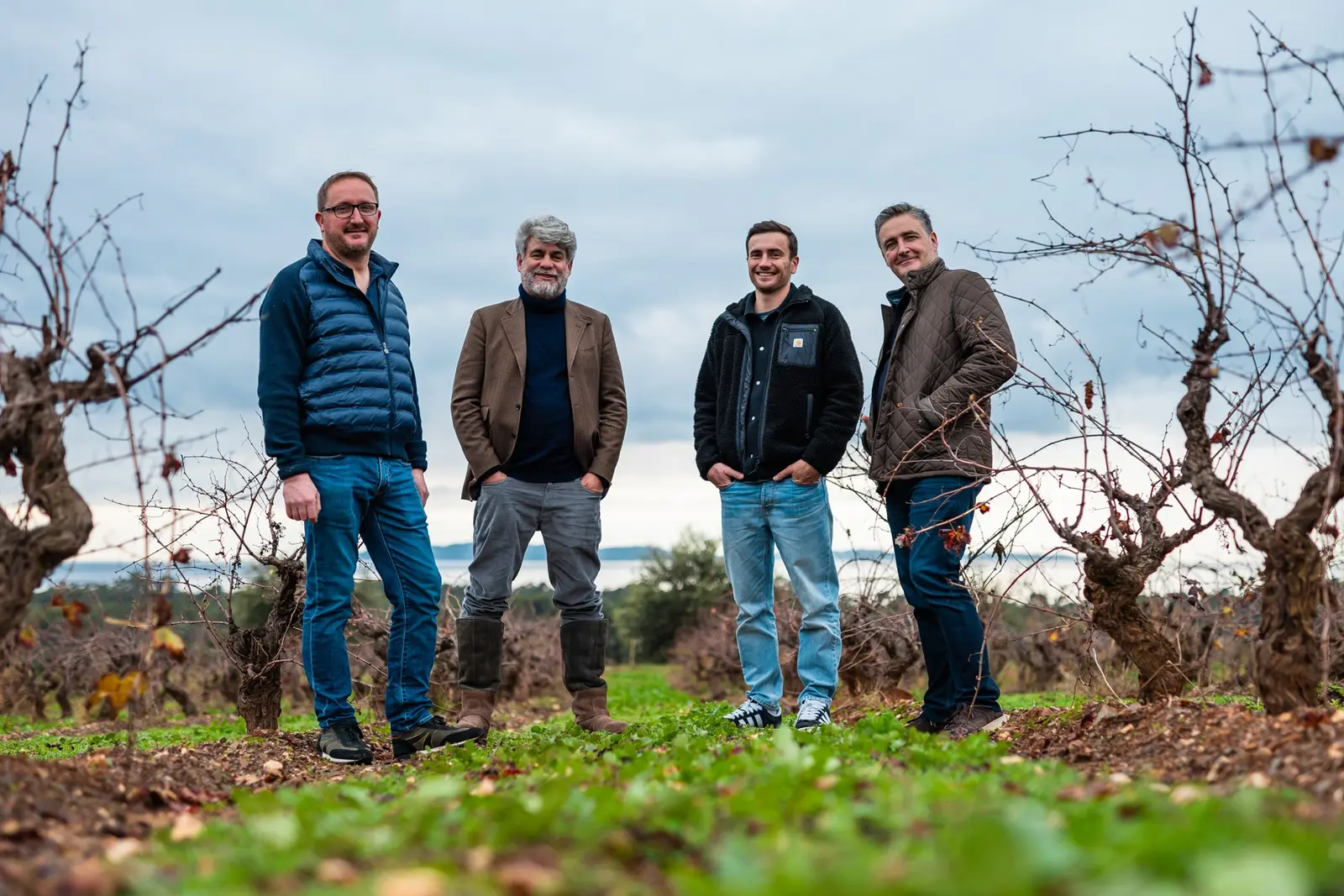
Four men together in the Domaine’s vineyards
Alexandre Chaudière, Antoine Tézenas du Montcel, Hugo Vuoso and Frédéric Chaudière

The first two cuvées

Two inaugural cuvées bring this approach to life.

AUR, the Domaine’s first cuvée, comes from old Rolle vines planted in the coastal sands, facing the Îles d’Or. Vibrant and luminous, with citrus at its core, it expresses Brégançon’s unmistakably maritime character.

YO is its red counterpart. Its first vintage, 2025, is scheduled for release in the first quarter of 2027. It is made primarily from old, goblet-trained Cinsault vines, around sixty years of age and rooted in schist and quartz. Fresh and lifted, this new cuvée reveals aromas of red berries, garrigue and pepper.

Through AUR and YO, the Domaine begins to reveal two complementary expressions of Brégançon: the light and salinity of the coastal sands; and the freshness, finesse and wild character of the schist-and-quartz terroirs on the higher ground.

Discover the cuvées

Moving forward with a new identity

The history of Domaine de Brégançon is one of continuity, rooted in a family presence dating back to 1816 while affirming a new identity: that of an independent estate, deeply connected to Brégançon and dedicated to creating rare, precise wines intimately bound to the parcels from which they come.

Preserve the land.

Express its nuances.

Reveal Brégançon in full.